Fine Red Feathers
Oromia
A Story from Shoa
Before you read the story
- Talk with a friend
- Talk about being kind and generous.
- Talk about a time when somebody was kind to you.
- How did you feel?
A keleche is a special object which Oromo people use when they make agreements.
Now read the story.
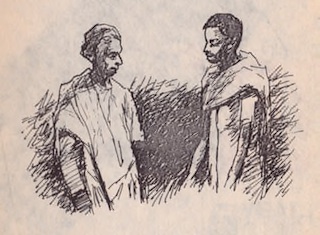
Once there was a man with two sons. He was very rich, with three stables full of cows.
The man loved his first son more than his second son. Before he died, he said to the older boy, "My three stables full of cows are for you."
But to his younger son he said, "You can have the old rooster with the red feathers."
The man died, and the first son took the three stables full of cows.
"Here, brother, take your rooster," he said to the younger son, and he laughed.
The two brothers lived near each other. One was rich now and the other was poor.
One day, the rich brother became sick and he went to the medicine man.
"Only one thing can make you better," the medicine man said. "You must kill and eat a rooster. It must be a beautiful bird with fine red feathers."
The rich brother went back to his house.
"What did the medicine man say?" his wife asked.
"He says I must kill and eat a rooster," the rich man said. "It must be a fine one, with red feathers. Oh! Oh! I am so sick! But what can we do? We haven't got a rooster."
"No," said his wife, "but your brother has one."
"Then run to my brother," the rich man said. "Ask him to give me his rooster."
The wife ran to the poor man's house.
"Your brother is very sick," she said. "He needs to eat a rooster with fine red feathers. Only that can make him better."
At once the poor brother called his wife.
"Catch the rooster and kill it," he said, "and take it to my brother. It's the only thing I have, but I will give it to him happily."
The rich man's wife took the rooster back to her house, killed it and spilled its blood. Then she cooked it and gave it to her husband.
But she never thanked her husband's brother.
The rich man ate the rooster.
"This is wonderful!" he said. "I feel better already."
He left his house and went to see his friends.
"Look!" he said. "I'm better. The medicine man was right. I ate a rooster with fine red feathers and now I'm well again."
But he never thanked his brother.
One day, the rich man woke up early in the morning.
"Something has happened," he thought. "I feel strange today."
He touched his face. It felt soft. He touched his arms and legs. They felt soft too. He jumped up and woke his wife.
"Wife, look at me," he said. "What has happened?"
His wife started to laugh.
"Where did all these red feathers come from?" she said. "They are on your face and arms and legs. Take them off."
She tried to pull some feathers off her husband's face.
"Ow! Oo! Stop!" he shouted. "That hurts!"
His wife looked frightened.
"Husband," she said, "this is terrible. The feathers are growing out of your body. Quick, go back to the medicine man at once!"
Her husband ran back to the medicine man.
"Help me!" he said. "Take these feathers away!"
The medicine man shook his head.
"I can't help you," he said. "We must take this problem to the elders."
The elders listened carefully to the rich man's story.
"You have been unfair to your brother," they said. "You took all your father's cows and gave none of them to your brother. He had only one thing, a rooster, and you took his rooster too. That was wrong. There is a curse on you now. If your brother forgives you, the feathers will fall off. Take the keleche to your brother. Ask him to spit on it. If he spits on it, you will know he has forgiven you. Then the feathers will go."
So the rich man took the keleche to his brother.
"Brother, I was unfair to you," he said. "You are a poor man. You had only one rooster, but I took it from you. Please forgive me and spit on the keleche."
So the poor man forgave his brother and spat on the keleche. The rich brother gave him a stable of cows and the feathers fell off him.
The elders smiled.
"The curse has gone," they said to the rich man. "Now remember the lessons of the feathers. Be kind and generous in future, and never be unfair."
Exercises
A. How much did you understand?
These sentences retell the story. Which are true and which are false?
- A rich man had two sons, and he loved the older one best.
- When the old man died, the younger son became rich.
- The medicine man told the older brother to kill and eat a cow.
- The rich man's wife bought a rooster with red feathers.
- When the rich man ate the rooster, he became better.
- The rich man thanked his brother for the rooster.
- The rich man grew feathers on his face and arms and legs.
- The medicine man told the rich man to go to the elders.
- The elders made the rich man spit on the keleche.
- The poor man forgave his brother, and the curse went.
B. Describe the people in the story
Choose the best endings for these sentences.
- The rich brother……
- The poor brother……
- The rich brother's wife…..
- The elders……
- …… gave good advice.
- …… was kind and generous.
- …… was selfish and ungrateful.
- …… was frightened of the feathers.
C. Actions and Results
In the story, many ACTIONS have a RESULT.
Choose the ending which shows the RESULT of each action from the box below.
- A man loved his elder son more than his younger son, so…
- The rich brother became sick, so…
- The rich man's wife said to the poor man, "Your brother is sick and needs to eat your rooster," so …
- The rich man didn't thank his poor brother, so …
- The elders said to the older brother, "If your brother forgives you, and spits on the keleche, your feathers will fall off," so …
- The rich brother agreed that he had been unfair, so …
- … the younger brother spat on the keleche, and the curse was removed.
- … he went to the medicine man.
- … he gave his brother a stable of cows.
- … the poor man gave his rooster to his brother.
- … he gave his elder son many cows, but he gave his younger son only one red rooster.
- … red feathers began to grow on him.
Did you notice that we use the word SO to show the RESULT of an ACTION?
D. What do you think?
Was the old man a good father to his two sons?
The rich man was selfish. Was his wife selfish too?
Did the elders give good advice to the rich brother?
Did you like the ending of the story?
Teachers’ answer key
A. How much did you understand?
- A rich man had two sons, and he loved the older one best.
Right - When the old man died, the younger son became rich.
Wrong. The older son became rich. - The medicine man told the older brother to kill and eat a cow.
Wrong. He told the older brother to eat a rooster. - The rich man's wife bought a rooster with red feathers.
Wrong. She took the rooster from her brother-in-law. - When the rich man ate the rooster, he became better.
Right. - The rich man thanked his brother for the rooster.
Wrong. He never thanked his brother. - The rich man grew feathers on his face and arms and legs.
Right. - The medicine man told the rich man to go to the elders.
Right - The elders said that the rich man should spit on the keleche.
Wrong. The elders said that the poor man should spit on the keleche. - The poor man forgave his brother, and the curse went.
Right.
B. Describe the people in the story
- The rich brother was selfish and ungrateful.
- The poor brother was kind and generous.
- The rich brother's wife was frightened of the feathers.
- The elders gave good advice.
C. Actions and Results
- 1/e. A man loved his elder son more than his younger son, so he gave his elder son many cows, but he gave his younger son only one red rooster.
- 2/b. The rich brother became sick, so he went to the medicine man.
- 3/d. The rich man's wife said to the poor man, "Your brother is sick and needs to eat your rooster," so the poor man gave his rooster to his brother.
- 4/f. The rich man didn't thank his poor brother, so red feathers began to grow on the him.
- 5/a. The elders said to the older brother, "If your brother forgives you, and spits on the keleche, your feathers will fall off," so the younger brother spat on the keleche and the curse was removed.
- 6/c. The rich brother agreed that he had been unfair, so he gave his brother a stable of cows.
For teachers — answers to the exercises above.