The Good Wife
Afar
The story of The Good Wife is a long and beautiful one. There are four chapters in the story, and there are questions at the end of each chapter. Answer the questions at the end of each chapter before you read the next one.
Before you read Chapter One, think about these questions:
- What makes a good wife?
- Must she be beautiful? Clever? Rich?
- Are there any other qualities that make a good wife?
- What makes a good husband?
- Must he have the same qualities or different ones?
Now read Chapter One
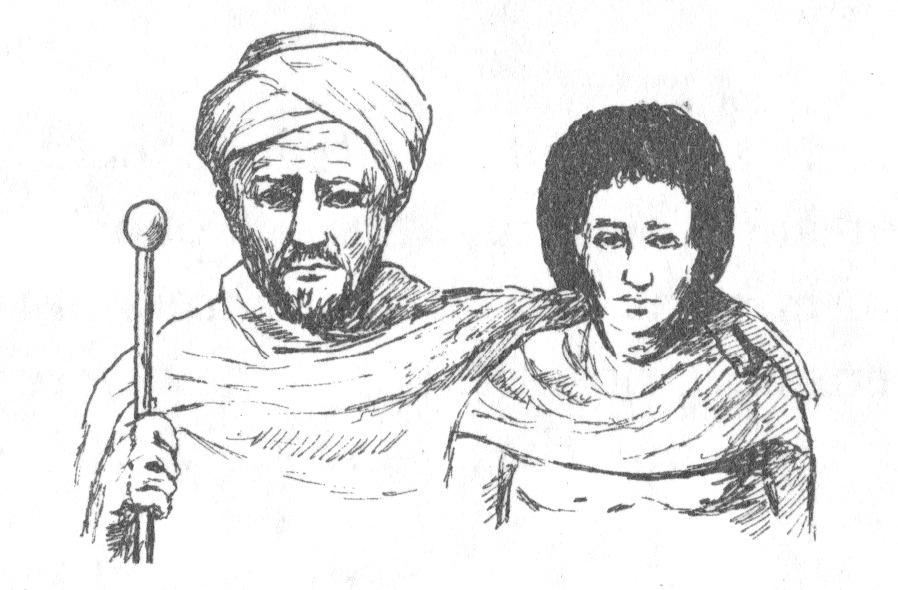
Once upon a time, there was a wise and good king. He had only one son, a boy named Delibis. Prince Delibis was a clever young man and the king loved him very much.
One day, the king called the prince to him and said, "Listen, my son. You will be king after I have died. I want you to be a wise ruler. But you will only be wise if you are happy. And you will only be happy if you marry a good and clever woman. So I want you to travel around my kingdom. Look for the best woman you can find and marry her. Then I am sure you will become a good ruler of our kingdom."
So Delibis left his father's house, and he began to travel around the kingdom. He went to every town and every village. He met the daughters of rich men and the daughters of poor men, the daughters of nomads and the daughters of hunters. Some of them were beautiful, but they were stupid. Some were wise,
but they were ugly. He couldn't find the perfect girl.
He spent many years travelling. He didn't look like a prince any more. His clothes were old and torn, his shoes were broken.
One day, the tired prince lay down to rest under a tree. It was the middle of the day, and the sun was high in the sky. His food was finished and he was very hungry. He fell asleep.
When he woke up, he saw a girl. She was looking after her father's sheep. Delibis looked at her. She was the most beautiful girl he had ever seen. He wanted to speak to her, but he couldn't.
"What's the matter?" the girl said. "You look hungry. I have only a little bread with me here, and you can have it if you like." She took out some bread and gave it to Delibis. He ate it hungrily.
"Thank you," he said.
The girl started to walk away. Delibis wanted her to stay.
"Have you seen my camel?" he said.
"No," the girl said. "I haven't seen a camel, but a blind one has passed this way."
"Really?" said the prince.
"And this camel had no tail."
"How do you know?" asked the prince.
"And there is a wound on its right side." the girl said.
The prince was very surprised.
"You haven't seen this camel," he said, "but you have described it perfectly. How did you do it?"
"Oh, it was easy," the girl said. "Look at this bush. A camel has been eating the leaves. But it has only eaten from one side of it. This probably means that it's blind in one eye. And do you see this camel dung? It's all together, in one pile. But camels move their tails when they drop their dung. When a camel has a tail, the dung falls in different places."
"But what about the wound on the camel's right side?" asked Delibis. "How did you know about that?"
"Look here, in the sand," said the girl. "A camel has been rolling here. But it has only rolled on its left side. This means that its right side must be wounded."
"I've found the girl I'm looking for at last," the prince said to himself.
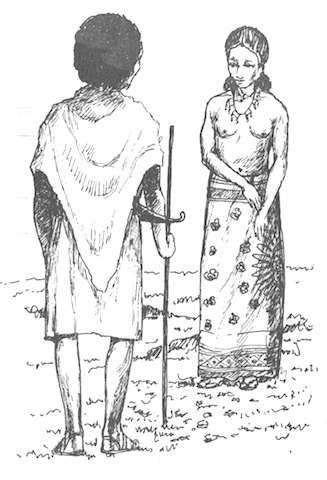
"Please," he said to the girl, "tell me your name."
"My name is Hariri," she said.
"And what is your father's name?"
"Nakrusa."
"Where does your family live? Where can I find them?"
"Down there," said Hariri, and she pointed to the village in the distance.
"I'll come back very soon," the prince said, "and speak to your family, but first I must go home. I must tell my father! I've found the girl I want to marry!"
Delibis hurried back to his father's house.
"Father!" he said. "I've found her! She's the wisest and most beautiful girl in your kingdom!"
His father smiled.
"That's good, my son. But don't be in a hurry. Find out more about the girl. Meet her family. Talk to them."
So Delibis began the journey back to Hariri's village. On the way, he met Nakrusa, Hariri's father.
"Let's walk together," he said to the old man.
"Very well," Nakrusa said.
It was a long way to the village. The path was rough and stony and the sun was hot. Nakrusa and Delibis walked together but they didn't speak.
At last, Delibis said, "The journey is too long and we are both tired. Let's make it easier. Why don't you carry me? Or, if you like, I will carry you. Then the time will pass more quickly."
Nakrusa looked at Delibis but he didn't say anything.
"What a crazy idea!" he thought. "What a stupid young man!"
They walked on and on, but they still didn't speak. After a while, they passed some young men. They were looking after a herd of a hundred cows.
"Old man," said the prince. "Who do these cows belong to?"
"They belong to my cousin," said Nakrusa. "He's a very rich man."
"Rich?" the prince laughed. "No! He must be poor. I'm sure he's a poor man. I'm sorry for him."
Nakrusa shook his head.
What a strange young man! he thought. He's sorry for a man who has a hundred cows!
A little later, they passed another herd of cattle. There were ten cows and one bull.
"Whose cattle are these?" Delibis asked.
"Oh, they belong to my neighbour," said Nakrusa. "He's only a poor man."
"Poor?" said the prince. "I don't think so. I think he's rich. Yes, he's certainly a rich man."
"This young man is crazy," Nakrusa thought.
They walked on and on, over the hills, until they came to a valley. There was a field of wheat in the valley. It was already yellow and ready for the harvest.
"Is this wheat free, so that travellers can eat it?" asked Delibis.
"Free?" said Nakrusa. "What do you mean, free? Of course it isn't free! It belongs to the farmer."
"I don't understand this boy at all," he said to himself.
The sun was going down now. It was nearly evening. At last they could see the village in the distance. Some people were coming out of the village. They were carrying the body of a dead man. They were taking him to the cemetery.
"Who has died?" Delibis asked Nekrusa. "Who was this man?"
"He was a good old man," Nekrusa answered. "I knew him well."
"And will his name be buried with him?" asked Delibis. "Or will his name live on?"
"How stupid!" Nekrusa thought. "The poor man is dead. Of course his name dies with him! It won't be used again."
He said nothing. He walked on towards his house and Delibis followed him.
Chapter Two
Before you read the chapter
- Did you think that the prince’s questions in Chapter One were crazy?
- Do you think they will be explained in Chapter Two?
- Will Nakrusa change his mind about the prince?
- What do you think will happen next?
Now read the chapter
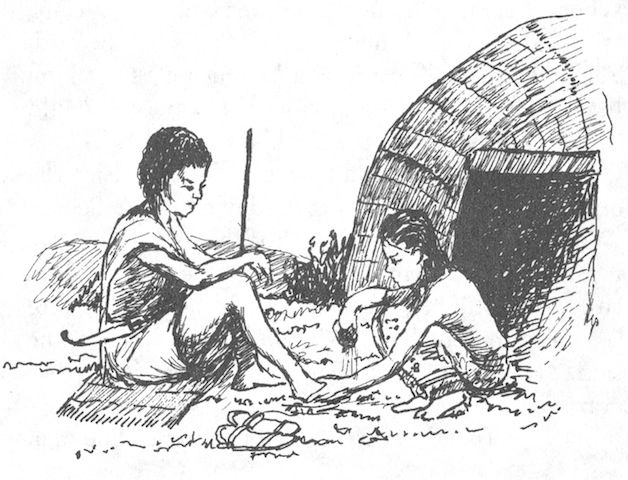
The prince and Nakrusa came to Nakrusa's hut. The old man turned round to Delibis. He wanted to say goodbye. But the prince had already followed him into his compound.
Nakrusa was tired of Delibis. He wanted him to go away. But now the young man was his guest. He had to welcome him. So he went into his hut and brought out a mat. He put it on the ground and Delibis sat down on it.
Hariri was inside the hut. She was cooking the evening meal.
"Listen, daughter," Nakrusa said to her. "We have a very strange guest. A crazy young man has followed me all day. He's come to the village with me and now he's here in my compound. Take him some water so that he can wash his feet."
So Hariri took some water and went out to wash Delibis's feet. He was very happy when he saw her. She smiled at him, and his heart jumped. She was even more beautiful than before.
"Why don't you put your feet on the mat?" she asked him. "Look. They're on the dirty ground."
"But my feet are still dirty," Delibis answered. "You haven't washed them yet. If I put them on the mat now, the mat will get dirty too."
So Hariri washed his feet. When they were clean, he put them on the mat.
Hariri went back into the hut to find her father.
"This young man isn't crazy at all," she said.
"Oh yes, he is," said Nakrusa. "Do you know what he said to me on the road? 'Let's make the journey easier,' he said. 'Why don't you carry me? Or, if you like, I'll carry you.' Wasn't that stupid? How can I, an old man, carry a big young man like him?"
"But father," Hariri said. "You don't understand. He meant that the journey was long and boring. He wanted to make it interesting. When he said, 'Why don't you carry me?' he meant, 'Why don't you tell me a story?' And when he said, 'Or if you like, I'll carry you,' he meant, 'Or, if you like, I'll tell you a story.' In that way, you could help each other along the road."
"Well, anyway," said Nakrusa. "That wasn't the only thing. We passed a big herd of a hundred cows. 'Who do these cows belong to?' he asked me. 'He must be a poor man.' Poor? A man with a hundred cows is rich! Then later, we passed a small herd of ten cows and one bull. 'Who do these belong to?' he said. 'Oh, he must be a rich man.' Now, isn't that crazy?"
"No, father," Hariri said. "He's right. The man with a hundred cows is rich now, but he won't be rich for long. If he doesn't have a bull, his cows will never give birth to calves. After a while they will all die and he'll be poor again. But the man who has a bull as well as ten cows will soon be rich. His cows will all have calves. He'll have more and more cattle every year."
"You haven't heard it all," Nakrusa said. “We passed a field of wheat. 'Is this wheat free, so that travellers can eat it?' this stupid boy asked me."
'Free?' I said. 'Of course it isn't free. It belongs to the farmer. Only he can eat it.'"
"But father," said Hariri. "Who is the farmer? Is he a generous man? Does he give food to the guests and travellers who come to his hut?"
"Yes," said Nakrusa. "I know the man. He's a good man. He's always kind to guests and travellers."
"And does he ask them to pay for their food?" asked Hariri.
"Of course he doesn't!" Nakrusa answered. "What kind of man asks his guests to pay for their food?"
"Then the young man was right," Hariri said. "The wheat is free. Travellers can eat it without paying."
"Well, perhaps," Nakrusa said. "But listen to this. While we were coming into the village, we passed a funeral. A crowd of people were taking a dead man to the cemetery. And do you know what this poor fool said? 'Will his name be buried with him, or will it be used again?'"
"Oh," said Hariri, "that's easy to understand. He was asking you if the man had a son. The father's name lives on in his son. It's not buried with him. It's used again and again."
Nakrusa was tired of talking to his daughter. He went to talk to her uncles.
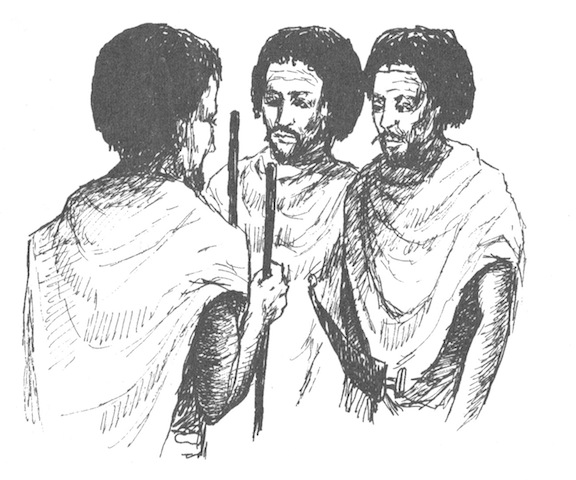
"My daughter's crazy," he said. "You have seen that strange young man sitting outside my hut. He asks all kinds of stupid questions. But my daughter likes him!"
"Does she?" said Hariri's uncles. "That's good. Your daughter isn't a child now. She must get married soon. Why don't you let her marry him? He looks like a good man to us."
"Oh, very well," said Nakrusa. "But it's all so strange. I can't understand it at all! They're both crazy!"
Hariri heard her uncles and her father. She was very happy.
"He's so handsome," she said to herself, "and so clever. He's the best young man I've ever seen."
Delibis was still sitting outside the hut on the mat. He heard Hariri's words. He was very, very happy.
Chapter Three
Before you read the chapter
- Will Hariri be happy to marry the king's son?
- Would you like to marry a famous person? Or a rich person?
Now read the chapter
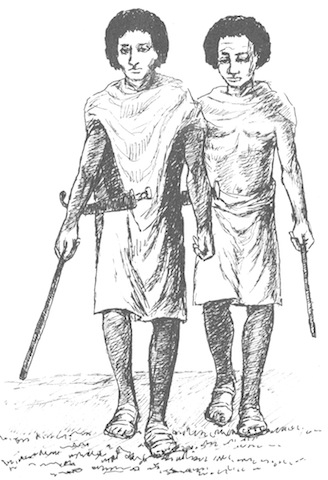
The wedding was soon arranged. Delibis hurried back to his father, the king.
"Hariri is a wonderful girl!" he said. "The best girl in all Afar!"
"I am very happy for you, my son," the king said. "Send camels and cattle for the feast. Take some servants and all my armed men. Go to her house and marry her. Then bring her back to the palace."
"Oh no, father," said the prince. "She doesn't know that I'm the king's son. I don't want to tell her yet. I won't take any armed men with me. When I go to her house, I'll take only one servant. She'll think I'm a poor man. If she marries me, I'll know she really loves me."
The king smiled.
"Very well, my son," he said. "Go, but come back soon. I want to meet my new daughter."
It was a long way from the king's house to Nakrusa's village. The prince and his servant started their journey early in the morning. But they walked all day. The sun rose higher and higher in the sky. It became hotter and hotter.
"I'm very hot, and very, very thirsty," Delibis said. "I must have a drink."
"That's all right, sir," the servant said. "Look, we're coming to a water hole. You'll find some water there."
They came to the water hole and Delibis looked down into it. The hole was deep. The water was a long way down.
"Climb down and fill my water bottle," Delibis said to his servant.
"Oh no, sir, I can't do that," the servant said. "I don't want to fall and break my neck."
So Delibis climbed into the water hole himself. He drank the cool clean water and filled his bottle. Then he looked up at his servant.
"Pull me up!" he shouted.
But the servant laughed at him.
"Pull you up?" he said. "Why? You fool, I'm going to be the master now!"
He picked up a big stone and lifted it above his head.
"He's going to throw it down and kill me!" thought Delibis.
"Wait a minute!" he shouted. "Don't kill me! You'll never escape. Someone will soon find my body. They'll tell my father, and he'll send his men to kill you. I've got a better idea."
The servant put the stone down.
"What do you mean, a better idea?" he said.
"We'll change our clothes," said Delibis. "You take my clothes and I'll take yours. You can be the master, and I'll be the servant."
The servant laughed.
"That's a stupid idea," he said. "If I pull you out of the water hole, you'll kill me. I know you will."
"I won't kill you, I promise," said the prince. "And I won't tell anyone that you're my servant."
The servant picked up the stone again.
"I don't believe you," he said. "Get ready to die."
"Very well," the prince said, "but don't you want to marry the most beautiful girl in Afar? How will you find her father's house? Only I know the way."
The servant thought for a moment.
"Do you really promise?" he said. "You won't kill me? You'll be my servant and I'll be your master?"
"Yes," answered Delibis. "You know me. I always keep my promises."
"All right," the servant said, and he pulled Delibis out of the water hole.
They changed their clothes. The prince took the servant's, and the servant took the prince's. Then they walked on along the road.
At last they came to Nakrusa's village. Everything was ready for the wedding. The women were cooking a wonderful feast. Guests were arriving. People were singing and dancing.
Hariri couldn't wait to see the face of her dear Delibis. She looked out of her hut, but there was the servant, dressed in Delibis's clothes.
"This man isn't my husband," she said. "I've never seen him before."
"Don't be a fool," her father said. "Look at his clothes, his dagger and his shoes. He was wearing them when he came here before."
"But my husband is a clever man," said Hariri. "This man looks like a fool. Let me ask him some questions."
"Oh very well," Nakrusa said. "But be quick. The guests are waiting. The wedding must begin."
So Hariri came out of her hut and spoke to the servant.
"Tell me," she said, "what is the heaviest thing a man can carry?"
The servant frowned.
"The heaviest thing?" he said. "Um - let me think. A camel's heavy. No, a fallen tree is heavy. Ah! I know! A grinding stone! Yes, a grinding stone is the heaviest thing."
Hariri looked behind the servant.
"Who is that man, standing under the tree?" she wondered.
"Here's my next question," she said. "What is the sweetest food in the world?"
"The sweetest food," the servant said. "The sweetest food... Yes! I know the answer! The sweetest food is honey!"
Hariri was watching the man under the tree. He was coming towards her now.
"I have one more question," she said to the servant. "What is the most beautiful smell in the world?"
The servant shook his head.
"What a stupid question!" he said. "Flowers have the sweetest smell! Everyone knows that."
Delibis was standing behind his servant now. He smiled at Hariri.
"This man says he's my husband," said Hariri, "but he's a fool. His answers are stupid!"
Nakrusa was very angry.
"Daughter!" he said. "What are you saying? Look, the wedding guests are here. The feast is ready. Take this man. He is your husband!"
"Please, father," Hariri said. "I can't marry a fool. Let me talk to his servant."
She looked at Delibis. "Did you hear my questions?" she asked him.
"Yes," said Delibis, "and here are my answers. Your first question was, 'What is the heaviest thing a man can carry?' My answer is 'A promise.' A promise is a very, very heavy thing. For me, just now, it's the heaviest thing in the world. Next, you asked, 'What is the sweetest food?' I know the answer to that question. I was alone once in the desert. I had no food. I nearly died of hunger. Then I met a girl. She gave me a piece of dry bread. It was the sweetest food in the world, because I was so hungry.
Your third question was this: 'What is the most beautiful smell?' I can answer that one, too. It is the smell of the skin on the neck of your baby son. I don't have a son yet. But one day, God willing, He will give me a wife. And one day, God willing, she will give me a son."
Hariri laughed and clapped her hands.
"Did you hear that, Father?" she said. "This man is my husband!"
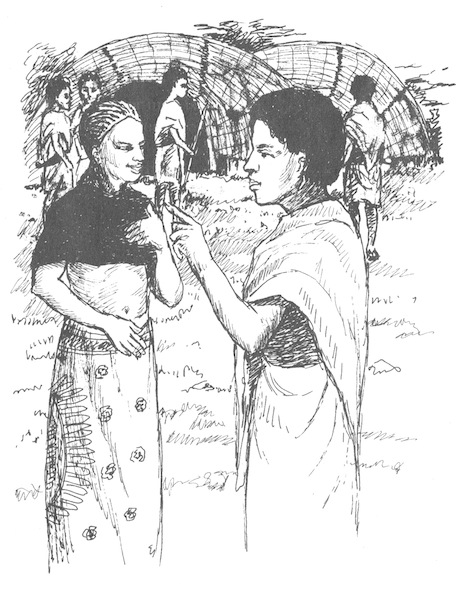
"But he's only a servant," Nakrusa said. "I'm tired of all this nonsense, Hariri. I'm your father. You must obey me. Marry the master, not the servant."
Hariri went and stood beside Delibis.
"Master or servant, this is the man I will marry," she said.
The servant was frightened when he heard this. He fell down on his knees.
"Oh please, please forgive me," he said to Delibis. "I was a fool. Don't tell the king, your father."
"The king? Your father is the king?" Nakrusa said to Delibis. "My dear boy, this is wonderful! Hariri, my child, you are right, of course. This is the right man for you. I always knew you were a clever girl. You're going to marry a prince! Where are the singers? Is the food ready? Let the marriage begin!"
Chapter Four
Before you read the chapter, what do you think will happen next?
- Will the king, Delibis's father, like Hariri?
- Will Hariri and Delibis be happy together?
- How do you think the story will end?
Now read the chapter
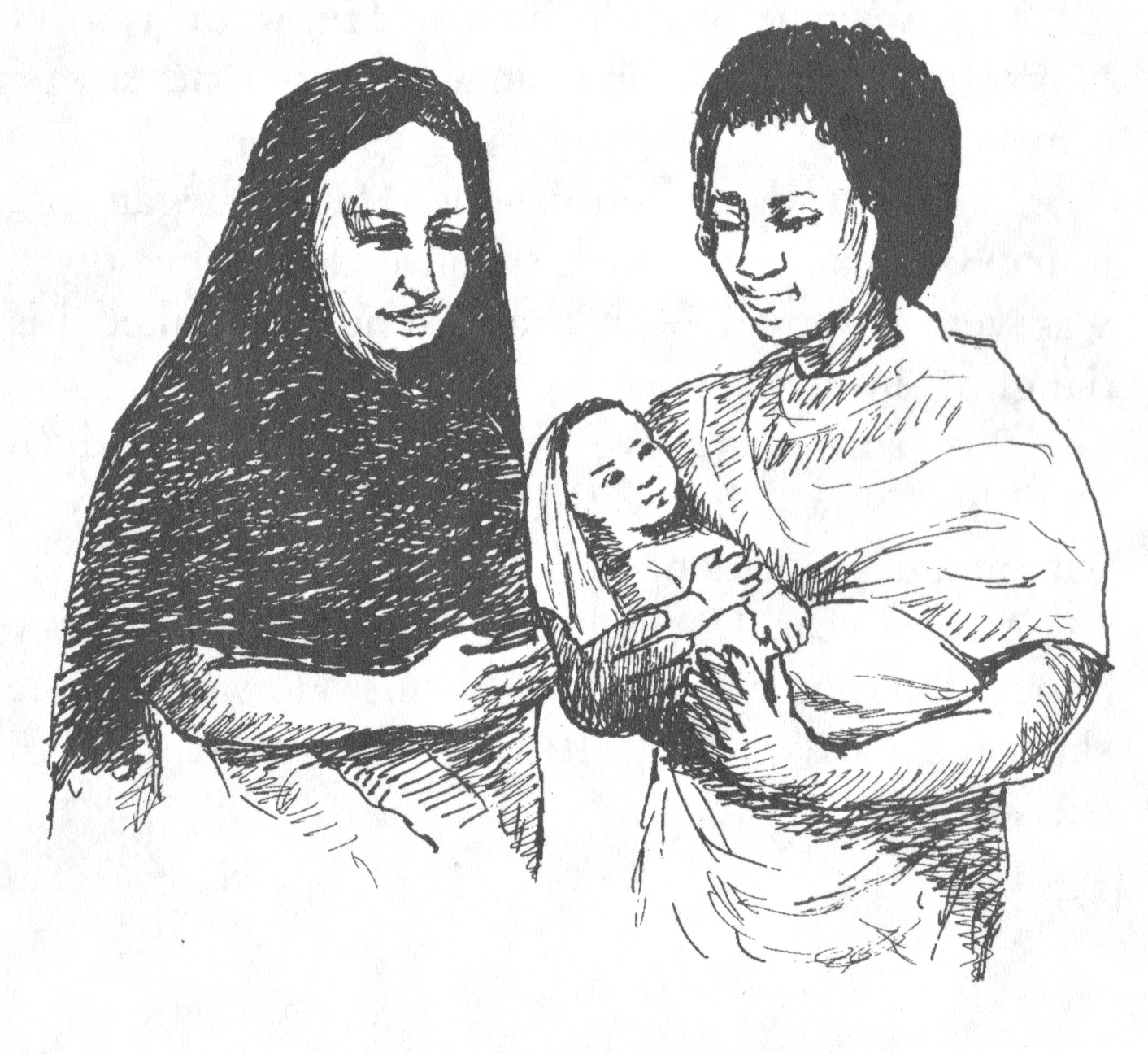
The wedding was a happy one. Everyone ate and sang and danced. Only Delibis's servant wasn't happy. He went out of Nakrusa's compound and ran away. They never saw him again.
The next day, Delibis and Hariri began the journey back to the king's house. Everyone there was very happy to see them. The king liked his daughter-in-law at once.
"My son, you have chosen well," he said to Delibis. "Now I know that one day you will be a wise and happy ruler."
After a year, Hariri had a son. Delibis was very happy. He took his son in his arms. He smelled the skin on the baby's neck. It was the sweetest smell in the world for him.
Hariri smiled at him.
"I have given you a son," she said. "Now I want you to give me a promise."
"Yes, of course," said Delibis. "What is it?"
"I'm always frightened when you go out at night," Hariri said. "There are bad men in the town and the wadi is the most dangerous place. Please don't go to the wadi in the evening, when the people and the animals have returned to the town. Promise me."
"I promise," said Delibis.
And so Delibis and Hariri lived happily for many years. They had seven sons and seven daughters. The old king died, and Delibis became king. He was a wise and good ruler.
The years passed. One day, when Delibis and Hariri were old, a servant came to Delibis.
"The camels have returned from the wadi," he said, "but one of them is lost."
Delibis forgot his promise to Hariri.
"I'll go myself and look for it," he said.
It was dark outside. There was only a half moon in the sky. Everything was quiet. There was nobody at the wadi now. Everyone was at home in their own houses.
Suddenly, four men jumped out from behind a tree.
"Give us your money!" shouted one.
"Give us your clothes!" shouted another.
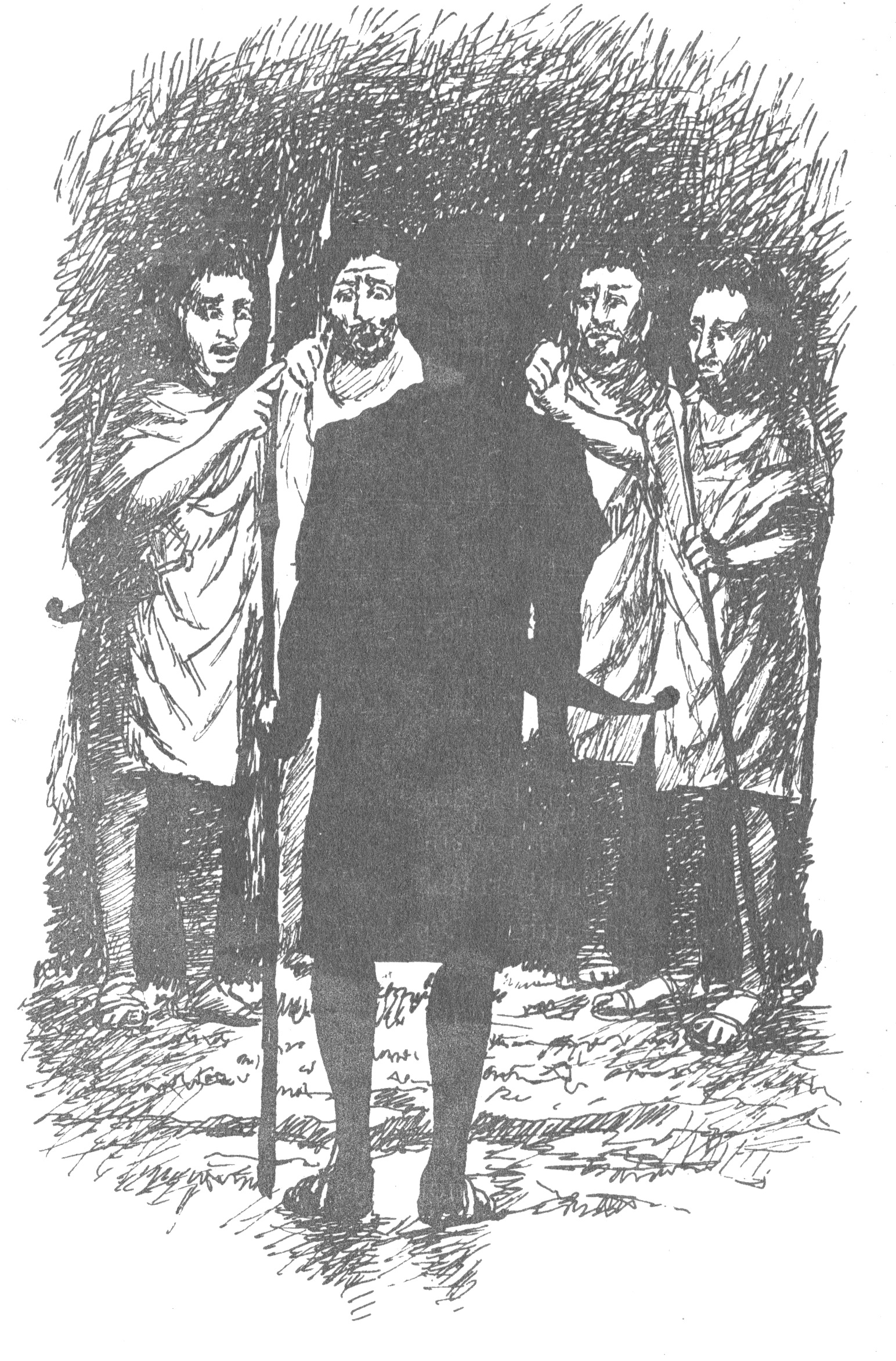
The third man came close to Delibis and looked at his face.
"Let him go," he said to the others. "It is the king!"
"What?" the fourth man said. "Yes, quick, let him go."
But the first two robbers laughed.
"Let him go?" they said. "Are you crazy? He'll send his soldiers after us. They'll catch us and kill us. No, we must kill him now."
They began to argue with each other.
"Kill him!" the first two robbers said.
"Let him go!" said the others.
The first two robbers were the strongest.
"We must kill you," they said to the king. "We want to save our own lives."
"Give me one last wish before I die," the king said.
"Very well," said the robbers. "What is it?
"Go to my house," Delibis asked them. "Tell my wife that you saw me near the wadi. Say to her, ‘There's a black cow in my herd of cattle. Its horns are too long. It will put out the eyes of the other cows. Take it out of the herd.’"
"Is that all?" asked the third robber.
"No," answered the king. "Tell her this: ‘There's a black mat on the roof of my house. Take it away. Put a white mat there in its place.’"
"Is there anything else?" said the fourth robber.
"Yes," Delibis answered. "I have four camels. Tell my wife to keep two of them. But tell her to let two of them go."
"Have you finished now?" the first robber said.
"Yes," said Delibis.
"Then you must die," the first robber said.
And so the robbers killed Delibis. They took his body and threw it under a tree.
"Come on," the first two robbers said. "We must run away."
"No," said the third and fourth robbers. "We must take the king's message to his wife. We promised."
"Are you crazy?" the first robber said. "She'll know that we killed him. Her sons will kill us."
"But she doesn't know that he's dead," the third robber said. "Nobody knows that he's dead."
So the four robbers went to Delibis's house. They asked to see the queen. She was talking with her seven sons. They were all carrying spears.
The first robber walked boldly up to the queen.
"I have a message for you," he said, "from your husband, the king."
"Where did you meet him?" Hariri asked.
"At the wadi," the robber answered.
The queen put her hand over her mouth. Her eyes opened wide and she looked at the robbers. Her sons moved towards her.
"Is my husband well?" she asked.
"He's fine," laughed the robber. "We left him under a tree. He'll be home soon."
"And what was his message?" Hariri asked.
The first robber told her the words of the king.
When he finished, Hariri said to her sons, "Catch these men!"
"Why?" her eldest son asked. "They have only brought some messages from our father."
The robbers were already running out of the compound.
"Quick! Quick! Don't let them escape!" shouted Hariri.
Her seven sons ran after the robbers and caught them. They brought them back to the queen. She was crying.
"What's the matter, Mother?" her eldest son asked.
"Didn't you understand your father's message?" said Hariri. "Listen, this is what it means. 'Take the black cow out of the herd of cattle,' he said. 'It will put out the eyes of the other cows.' This means that your father doesn't want the crows to eat his eyes. He wants us to bury his body."
"You mean our father's dead?" her sons asked.
"Yes," said Hariri. "This is his second message. 'Take away the black mat on the roof. Put a white one there.' He is dead and he wants me to put white clothes on for him."
"It was these men who killed my father!" shouted one of the sons, and all of them lifted their spears.
"Wait!" said Hariri. "There was one more message. 'Keep two of my camels,' your father said, 'but let two of them go.' This means that two of these men killed him, but two tried to save his life."
The robbers fell down on to the ground.
"You know everything!" the first robber said. "You're right. It was my friend and I who killed the king. These two men tried to save him."
"Kill the murderers!" shouted the brothers, and they killed the first two robbers with their spears and daggers.
Then the third and fourth robbers took Hariri and her sons to the wadi. They found the body of Delibis and brought him home. Hariri put on white clothes and her sons buried their father.
"He was a great king," all the people said. "Why? Because he was married to a good and clever woman."
Listen to the whole story:
Teachers’ answer key
Chapter 1
A. How much did you understand?
The correct order of the sentences is 3, 4, 1, 2
"You will be king after I have died."
"But you will only be wise if you are happy."
"And you will only be happy if you marry a good and clever woman."
"So I want you to travel around my kingdom."
The correct order of the sentences is 7, 5, 8, 6
She took out some bread and gave it to Delibis.
"Have you seen my camel?" he said.
"You haven't seen this camel, but you have described it perfectly."
"I've found the girl I'm looking for at last," the prince said to himself.
The correct order of the sentences is 10, 12, 9, 11
"Let's walk together," Delibis said to the old man.
"They belong to my cousin," said Nakrusa.
"Free?" said Nakrusa. "What do you mean, free?"
"And will his name be buried with him?" asked Delibis.
B. Choose the right answers from A, B, C, and D
When Delibis met Hariri, she was:
c) looking after her father's sheep
Hariri knew that a half-blind camel had passed that way because:
b) it had eaten leaves from one side of a bush
What did Hariri's father and Delibis see on the road?
b) a herd of cattle with ten cows and a bull
C. What do you think?
Which is the best title for this chapter?
We think that Looking for a Good Wife is the best title for this story. Do you agree?
Chapter 2
A. How much did you understand?
Here are some possible answers.
- Nakrusa welcomed Delibis because he was now his guest.
- Delibis didn't want to make the mat dirty.
- He wanted Nakrusa to tell him a story.
- The man didn't have a bull, so his cows couldn't have calves.
- The man had a bull, so his cows could have calves.
- He wanted to know if the man was generous.
- He wanted to know if the man had a son.
- Hariri wasn't a child. She needed to get married soon. They liked the look of Delibis.
- She wanted to marry Delibis.
B. Who is talking?
- "We have a very strange guest. Take him some water so that he can wash his feet," said Nakrusa to Hariri.
- "Why don't you put your feet on the mat?" said Hariri to Delibis.
- "This young man isn't crazy at all," said Hariri to Nakrusa.
- "That wasn't the only thing," said Nakrusa to Hariri.
- "The man with a hundred cows is rich now but he won't be rich for long," said Hariri to Nakrusa.
- "What kind of man asks his guests to pay for their food?" said Hariri to Nakrusa.
- "You have seen that strange young man sitting outside my hut," said Nakrusa to Hariri's uncles.
- "Your daughter isn't a child now," said Hariri's uncles to Nakrusa.
- "But it’s all so strange. I can't understand it at all!" said Nakrusa to Hariri's uncles.
- "He's the best young man I've ever seen," said Hariri to herself.
C. Which is the best title for this chapter ?
We think that Hariri Shows That She Is Clever is the best answer. Do you agree?
Chapter 3
A. How much did you understand?
- 1/e. Why does Delibis take only one servant with him to the wedding?
Because he wants Hariri to think that he is a poor man. - 2/c. Why does Delibis's servant refuse to climb down the water hole?
Because he doesn't want to fall and break his neck. - 3/f. Why doesn't the servant kill Delibis?
Because he wants to marry a beautiful girl. - 4/g. Why does Hariri want to ask the servant some questions?
Because she wants to show that the servant is a fool. - 5/d. Why doesn't Delibis tell Hariri who he is?
Because he made a promise to his servant. - 6/a. Why does Hariri laugh and clap her hands?
Because she recognises Delibis by his clever answers. - 7/b. Why does Nakrusa accept Delibis as his son-in-law?
Because he learns that Delibis is a prince.
B. Who is speaking?
- "I'm very hot, and very, very thirsty." Delibis
- "The wedding must begin." Nakrusa
- "Yes, a grinding stone is the heaviest thing." The servant
- "I always keep my promises." Delibis
- "I've got a better idea." Delibis
- "But he’s a fool. His answers are stupid." Hariri
- "What is the sweetest food?" Hariri
- "Send camels and cattle for the feast." The king
- "You fool, I'm going to be the master now!" The servant
- "A promise is a very, very heavy thing." Delibis
C. Where did it happen?
- 1/c. Nakrusa's village was a long way from the king's house.
- 2/a. When the servant picked up the stone, Delibis was in the water hole.
- 4/b. When Delibis arrived at the village, Hariri was in the hut.
- 5/d When Hariri talked to the servant, Delibis was under a tree.
- 6/e. When Delibis smiled at Hariri, he was standing behind the servant.
- …… in the water hole.
- …… in the hut.
- …… a long way from the king's house.
- …… under a tree.
- …… standing behind the servant.
D. Which is the best title for this chapter?
We think that The Wicked Servant is the best title for the chapter. Do you agree?
Chapter 4
A. How much did you understand?
The right order of these sentences is 3, 1, 2
After a year Hariri had a son.
"Now I want you to give me a promise."
The old king died, and Delibis became king.
The right order of these sentences is 5,6,4
Suddenly, four men jumped out from behind a tree.
"Let him go. It's the king!"
"Give me one last wish before I die."
The right order of these sentences is 9,8,7
"There's a black cow in my herd of cattle."
"There's a black mat on the roof of my house."
"I have four camels. Tell my wife to keep two of them."
The right order of these sentences is 11,10,12
"Where did you meet him?"
"You know everything!'
"This means that two of these men killed him, but two tried to save his life."
B. Who?
- "There are bad men in the town."
Hariri - "The camels have returned from the wadi."
A servant - "We want to save our own lives."
The first two robbers - "We must take the king's message to his wife."
The third and fourth robbers. - "Where did you meet him?"
Hariri - "We left him under a tree."
The first robber - "Catch these men!"
Hariri - "You know everything!"
The first robber - "Kill the murderers!"
The brothers - "He was a great king."
All the people
C. What, where, when?
Find the answers to these questions in the story.
- When did Hariri have a son?
After a year - Where was the most dangerous place?
The wadi - Where was everyone, when Delibis went to the wadi?
At home in their own houses - What did Delibis go out to look for?
A camel - Where did the robbers put Delibis's body?
Under a tree - Where did the robbers go when they had killed Delibis?
Delibis's house - What were Hariri's seven sons carrying?
Spears - What did Hariri put on, when Delibis died?
White clothes
For teachers — answers to the exercises above.