The Unwise Judge
Amhara
Before you read the story
- Think about friends
- How do friends help each other?
- What happens when friends disagree?
- Have you ever helped a friend? What did you do?
Now read the story
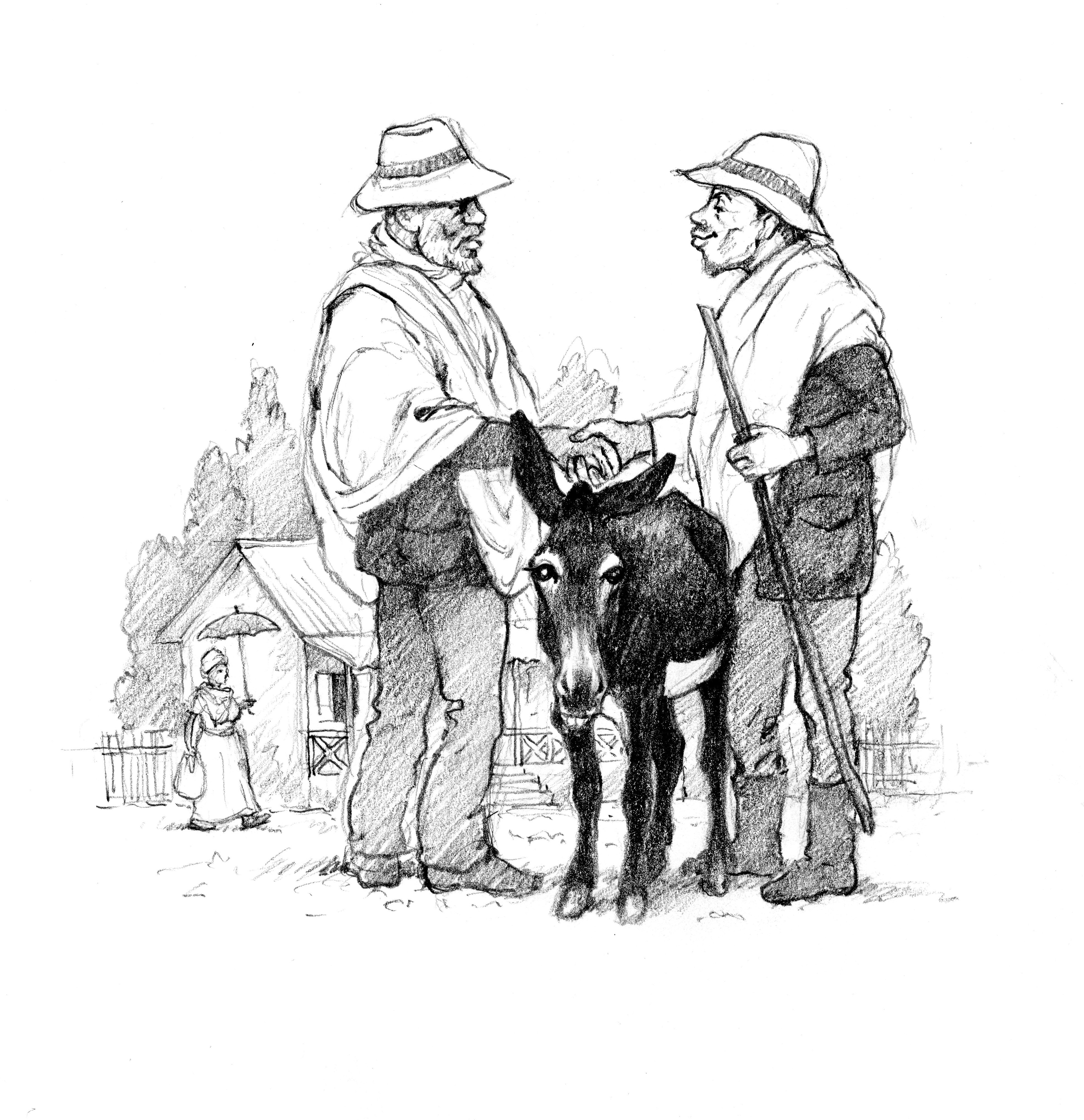
Once there were two neighbours. They were both poor, but they were friends. One day, one of them said to the other, "I must take my barley to the market today. The sack is very heavy, and the market is far away. I wish I had a donkey. But I don't have enough money to buy one."
His neighbour nodded.
"And I must buy some new pots in the market today," he said. "They will be very heavy. I will be tired when I come home. I wish I had a donkey, too. But a donkey is expensive. I only have half the money."
The first man had an idea.
"Listen, my friend," he said. "Let's buy a donkey together. You can pay for half of it, and I will pay for half of it. One week, I will take the donkey to the market, and the next week, you can take it."
His friend was very pleased with this idea. So that day, the two neighbours bought a donkey.
For a long time they were both happy. They used the donkey well. One week, the first neighbour took the donkey to the market. The next week, his friend took it.
But one day, the first neighbour's father died. The man took all his father's property, his fields and his trees, his cows and his sheep. The first neighbour was rich now. He didn't want to see his old friend any more. He didn't want to work with him and help him. And he wanted his half of the donkey.
"Listen," he said to his neighbour. "My dogs are hungry. They need meat. I want to kill our donkey. You can have half of it, and I will have the other half."
"What?" cried the poor man. "But I don't need any meat. I need the donkey. If you want to kill it, give me money for my half."
His neighbour was angry.
"I'm not going to give you any money," he said. "Half of the donkey is mine, and I want to have it."
"Let's go to the judge," the poor man said. "He can decide between us."
So the two neighbours went to see the judge. The judge was not a wise man. He didn't listen carefully. He didn't try to understand.
"Do you both own the donkey?" he asked.
"Yes," the men agreed.
"Then half of it belongs to one of you, and half of it belongs to the other," the judge said. "If the rich man wants his half, he can take it. Kill the donkey, and cut it in half."
The rich man was happy. He killed the donkey and took half of the meat. He gave it to his dogs. The poor man was unhappy.
"My poor donkey has gone," he thought, "and now I must carry everything myself."
A few months later, the rich man wanted to make a new hut for himself.
"I'll burn my old hut," he thought, "then I'll build a fine, big, new one."
He began to carry everything out of his hut.
The poor man saw him.
"What are you doing?" he asked.
"I'm going to burn my hut and make a new one," said the rich man.
"But your hut is next to mine," the poor man said. "If you burn your hut, you will burn mine, too."
The rich man was angry.
"Don't try to stop me!" he said. "This is my hut, and I will burn it if I want to."
"Stop!" cried the poor man. "Let's go and ask the judge."
The unwise judge didn't listen carefully. He didn't try to understand.
"Let the rich man burn his hut," he said. "It's his own hut. No one can stop him."
So the rich man burned his hut. The wind carried the fire to the roof of the poor man's hut. Soon it was burning too.
"Look!" the poor man cried to the judge. "My neighbour has burned my hut! He must pay me."
"No," said the judge. "Your neighbour burned his own hut. The fire burned your hut. Your neighbour can keep his money."
Now the poor man was very unhappy. He had no donkey and no hut. All he had was his field. Every day, he worked in his field. Every night he slept under a tree.
It was nearly harvest time now. In the poor man's field, there was a good crop of chick-peas. The poor man worked hard in his field. He pulled out the weeds. He frightened away the birds.
One day, the rich man's sons came to visit him. They passed by the poor man's field.
"Chick-peas!" they cried. "Look, they are delicious!"
They ran into the field, and began to pick the chick-peas and eat them. They ate and ate. Soon all the chick-peas were gone.
The poor man saw them from far away. He ran quickly to his field.
"What are you doing?" he said. "Where are all my chick-peas? Give them back to me."
"We can't give them back to you," they said. "We have eaten them. Ask our father. He will pay you for your chick-peas."
The poor man went to see the rich man.
"Your sons ate all my chick-peas," he said. "Give them back to me."
"I can't give them back to you," said the rich man, "but I'll give you some money to pay for them."
"I don't want your money," said the poor man. "I want my chick-peas, and I'm going to take them."
"Wait! Stop!" the rich man said. "Let's go and ask the judge."
So the two men went to see the judge. The judge didn't listen to them carefully. He didn't think about their case.
"The rich man's sons ate all your chick-peas," he said to the poor man, "and they must give them back. Cut them open, and take your chick-peas."
The rich man was very frightened.
"But my sons will die!" he said. "Please, neighbour, let me give you money."
"I wanted money when you killed our donkey," the poor man said. "I don't want it now. I want my chick-peas."
He picked up his knife.
"I'll build you a new hut!" the rich man said. "I'm sorry I burned your old one."
"I don't want a new hut," the poor man said. "I want my chick-peas."
He began to sharpen his knife on a stone.
"No! No! Please, wait!" cried the rich man. "Let's go and see the elders. Please, my old friend, let the elders decide."
So the two neighbours went to see the elders. The elders talked for a long time. At last they called the two men to them.
"You were wrong," they said to the rich man. "You refused to pay your neighbour for your donkey. You burned his hut, and your children ate his harvest."
Then they turned to the poor man.
"But you want to kill your neighbour's sons," they said. "That is wrong too. Here is our decision. The rich man must give to the poor man half of all his property, his trees and fields, his cows and sheep. Then you can live together in peace."
So the rich man gave the poor man half of all his property. They lived together happily, and they never quarrelled again.
Exercises
A. How much did you understand?
Read sentences 1, 2 and 3 below. Put them in the right order.
- The first man became rich.
- The first man wanted his half of the donkey.
- The two friends needed a donkey to carry heavy things to market.
Now put sentences 4, 5 and 6 in the right order.
- The first man’s father died.
- The two men bought a donkey together.
- The two men went to see the judge.
Now put sentences 7, 8 and 9 in the right order.
- The elders said both men were wrong.
- The two men became friends again.
- The second man lost his donkey.
B. Now put all nine sentences in the right order.
C. Are these sentences right or wrong?
- One week the donkey carried a sack of wheat to market.
- The two neighbours were happy with the donkey for a long time.
- The first neighbour wanted to feed the donkey meat to his hungry dogs.
- The rich man wanted to go to a judge to decide about the donkey.
- The rich man decided to knock down his old hut.
- The poor man now had to sleep under a tree.
- The poor man had a good crop of barley.
- The rich man wanted to pay for the crop that was eaten.
- The poor man wanted to cut open the rich man’s sons.
- The rich man gave the poor man all his animals and fields.
D. What were they feeling?
- The two neighbours bought a donkey together. They were feeling ……
- The first man’s dogs were feeling ……
- The first man did not want to give money for his half of the donkey. He was feeling ……
- The poor man had lost his hut and his donkey. He was feeling ……
- The rich man was feeling …… that his sons would be cut open and die.
- At the end of the story the two men were feeling ……
E. Where? What? When? How?
- How did the two neighbours take their goods to market before they had a donkey?
- Where was the market?
- What did the first man take when his father died?
- What did the second man want for his share of the donkey?
- When did the rich man decide to build a hut?
- When did the rich man’s sons go to the poor man’s fields?
- How long did the elders take to make a decision?
- How much did the rich man give the poor man?
F. What do you think?
Remember, there is not just one correct answer. What do you think?
Which person did you like in the story?
The first neighbour became rich. How did this change his friendship with his neighbour?
How was the judge unwise?
Can you think of another title for the story?
Teachers’ answer key
A. How much did you understand?
The right order of each set of three sentences is:
- The two friends needed a donkey to carry heavy things to market.
- The first man became rich.
- The first man wanted his half of the donkey.
- The two men bought a donkey together.
- The first man’s father died.
- The two men went to see the judge.
- The second man lost his donkey.
- The elders said both men were wrong.
- The two men became friends again.
B. Now put all nine sentences in the right order
The right order for all nine sentences is:
- The two friends needed a donkey to carry heavy things to market.
- The two men bought a donkey together.
- The first man’s father died.
- The first man became rich.
- The first man wanted his half of the donkey.
- The two men went to see the judge.
- The second man lost his donkey.
- The elders said both men were wrong.
- The two men became friends again.
C. Are these sentences right or wrong?
- One week the donkey carried a sack of wheat to market.
Wrong. He carried a sack of barley. - The two neighbours were happy with the donkey for a long time.
Right - The first neighbour wanted to feed the donkey meat to his hungry dogs.
Right - The rich man wanted to go to a judge to decide about the donkey.
Wrong. The poor man wanted to go to the judge. - The rich man decided to knock down his old hut.
Wrong. He decided to burn down his old hut. - The poor man now had to sleep under a tree.
Right - The poor man had a good crop of barley.
Wrong. He had a good crop of chick-peas. - The rich man wanted to pay for the crop that was eaten.
Right - The poor man wanted to cut open the rich man’s sons.
Right - The rich man gave the poor man all his property.
Wrong. He gave the poor man half of all his property.
D. What were they feeling?
- The two neighbours bought a donkey together. They were feeling pleased/happy.
- The first man’s dogs were feeling hungry.
- The first man did not want to give money for his half of the donkey. He was feeling angry.
- The poor man had lost his hut and his donkey. He was feeling unhappy/very unhappy.
- The rich man was feeling frightened/very frightened that his sons would be cut open and die.
- At the end of the story the two men were feeling happy.
E. Where? What? When? How?
Examples of answers:
- How did the two neighbours take their goods to market before they had a donkey? They carried them.
- Where was the market? Far away
- What did the first man take when his father died? His property, his fields, his trees, his cows and sheep
- What did the second man want for his share of the donkey? Money
- When did the rich man decide to build a hut? A few months later
- When did the rich man’s sons go to the poor man’s fields? Nearly harvest time
- How long did the elders take to make a decision? A long time
- How much did the rich man give the poor man? Half of all his property
For teachers — answers to the exercises above.